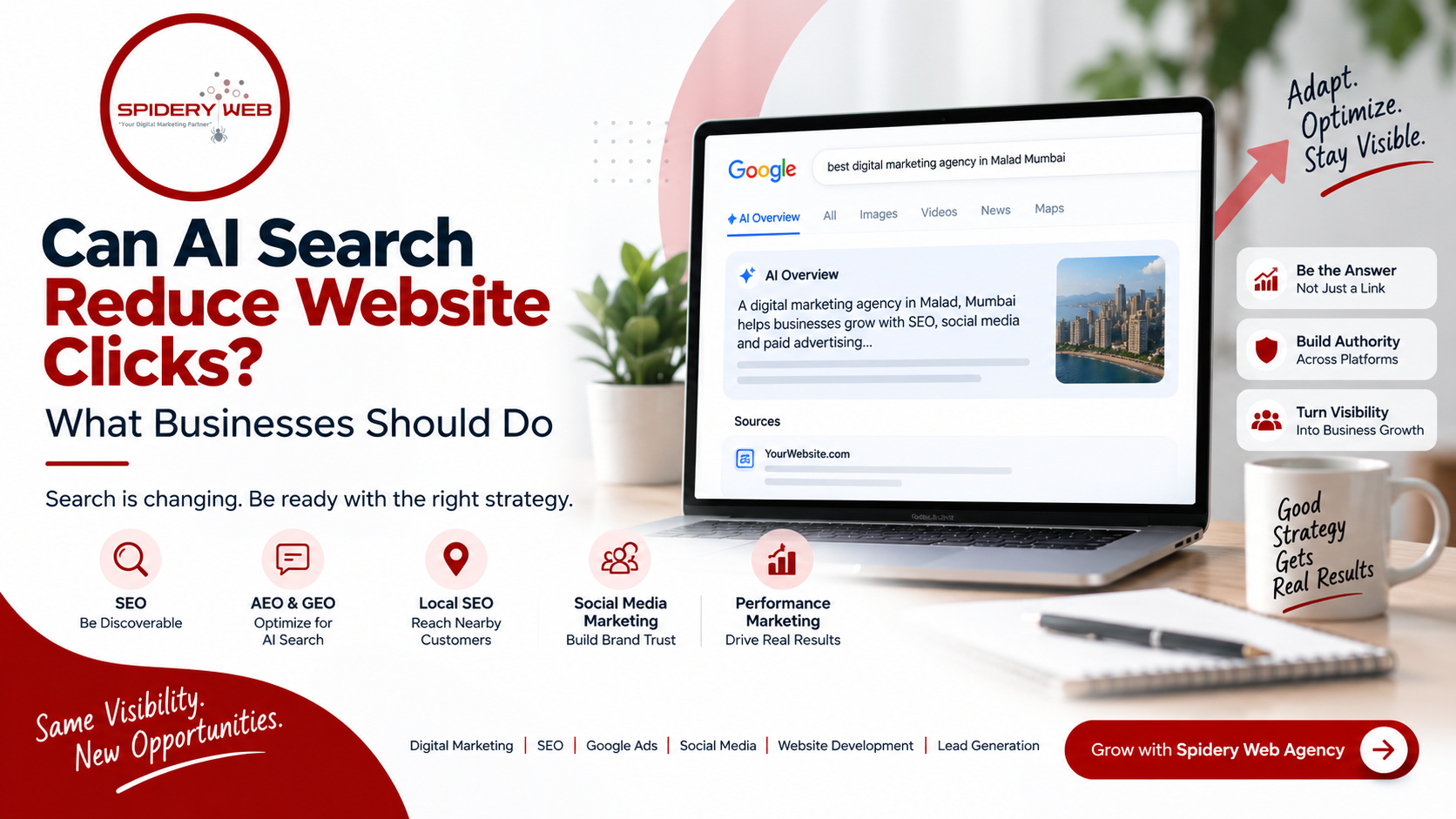
Search is changing quickly. People are no longer using Google only to type short keywords and visit the first few websites. With AI-powered search, users can ask longer questions, compare options and get summarized information directly within the search experience. This naturally raises an important question for businesses: If customers can get answers without visiting a website, will website traffic decline? The answer is more nuanced than a simple yes or no. Some searches, particularly those looking for quick factual answers, may require fewer website visits. At the same time, AI-powered Search is creating new ways for websites and brands to be discovered. Google says AI Overviews now have more than 2.5 billion monthly active users, while AI Mode has surpassed one billion monthly users. Google also says its AI Search experiences continue to provide links that help people explore original websites and sources. For businesses, this means the goal should not simply be to generate more clicks. The bigger goal is to become visible, useful and credible wherever customers are searching. What Is AI Search? AI Search refers to search experiences that use artificial intelligence to understand a user’s question and provide a more contextual response. Instead of returning only a traditional list of links, AI-powered search can: Google’s AI Mode is designed for longer and more complex questions. Google reported that the average AI Mode query is around three times the length of a traditional Search query. For businesses, this changes the way content needs to be planned. Why Are Website Clicks Changing? Not every search has the same purpose. Consider someone searching: “What is SEO?” They may be satisfied with a quick explanation. Now consider: “Which SEO strategy should a small healthcare business in Mumbai use to generate qualified local enquiries?” That person may want detailed information, examples, comparisons and eventually a service provider. This distinction matters. Google has said that while some searches can be satisfied directly in an AI response, people continue clicking through when they want to explore further, learn more, read an in-depth review or make a purchase. Google also reported that overall organic click volume was relatively stable year-over-year in its 2025 analysis and that average click quality had increased. So businesses shouldn’t panic about AI Search. They should adapt their content strategy to the new search journey. What Should Businesses Do About AI Search? 1. Stop Creating Content Only for Keywords Keywords still matter. But content should answer the intent behind the keyword. Instead of creating a page simply targeting: “SEO agency in Malad Mumbai” consider the questions a potential customer may have: This creates content that is useful beyond a single keyword. 2. Create Answer-Focused Content AI-powered search is designed to understand questions and context. Your website should therefore answer real customer questions clearly. Useful formats include: A simple structure works well: Question → Direct Answer → Explanation → Example → Next Step This makes your content easier for users to understand and gives search systems clear information to work with. 3. Strengthen Your SEO Foundation AI Search doesn’t mean traditional SEO is dead. Google says its generative AI search experiences are rooted in its existing quality and ranking systems. Google has also introduced new tools and guidance for website owners to navigate AI in Search. Your website should continue focusing on: SEO remains the foundation. A business looking for a Digital Marketing Agency in Malad Mumbai should therefore think about AI Search as an evolution of search, not a complete replacement for SEO. 4. Build Strong Brand Authority AI Search can introduce customers to brands they may not have discovered through traditional search. This makes brand authority increasingly important. Businesses can strengthen their authority by publishing: Google has also emphasized the importance of original content and first-hand perspectives in its evolving AI Search experience. The goal isn’t to manufacture mentions. The goal is to build a brand that has something genuinely useful to say. 5. Don’t Ignore Local Search AI Search does not make local search irrelevant. For a local business, customers may still search: “Best digital marketing agency near me” or “SEO agency in Malad Mumbai.” Your local presence should therefore remain strong. Focus on: For businesses serving Malad, this can help connect traditional local discovery with the broader AI-powered search journey. 6. Make Your Website Worth Clicking This may be the most important point. If AI Search provides a customer with a basic answer, why would they still visit your website? Give them a reason. Your website should offer information that goes beyond a generic AI summary. For example: Google has said AI Search is designed to connect users with the web and that it continues to send billions of clicks to websites through AI features. So the opportunity isn’t simply to receive a click. It is to earn a valuable click from someone who wants to go deeper. 7. Think Beyond Website Traffic Website traffic is useful, but it isn’t the only metric that matters. Businesses should also monitor: Imagine your website traffic decreases slightly but your qualified leads increase. Would that necessarily be a bad result? Not necessarily. The quality of the visitor matters. SEO, AEO and GEO: How Do They Fit Into AI Search? Modern search strategy is increasingly moving beyond traditional SEO. SEO — Search Engine Optimization Helps your website become visible in traditional organic search. AEO — Answer Engine Optimization Focuses on answering specific questions clearly and directly. GEO — Generative Engine Optimization Focuses on improving how your brand and information can be understood and surfaced in generative AI experiences. These shouldn’t be treated as completely separate strategies. A strong SEO foundation supports AEO and GEO. The overall approach becomes: Be discoverable → Answer clearly → Build authority → Earn the click What Does AI Search Mean for Small Businesses? Small businesses often worry that AI Search will make it harder to compete with larger brands. But AI-driven search also creates opportunities. A smaller business can differentiate itself through: For example,